

When you feel discomfort around an old restoration, a profound concern emerges: Does the material placed to heal my tooth actually cause decay underneath the filling? This is particularly pressing for patients seeking aesthetic, long-lasting options like Resin Fillings in Newark or other major metropolitan areas.
The short, direct answer is no, the filling itself does not possess the biological mechanism to create decay. Tooth decay (caries) is a disease caused exclusively by bacterial biofilm, acid production, and the subsequent demineralization of tooth structure. However, the presence of a restoration introduces a critical factor: the margin. Decay that recurs beneath a filling, known clinically as Secondary Caries (or Recurrent Caries) is the result of an architectural failure at this margin, allowing bacteria to bypass the restoration and attack the unprotected tooth structure below.
This article delves into the advanced reasons why secondary caries is the leading cause of filling failure, examining the material science, placement techniques, and biological factors that determine the long-term success of your dental work.
I. Understanding the Architectural Failure: The Marginal Integrity
The entire lifespan of a dental restoration hinges on the integrity of the seal, the seamless interface between the filling material and the prepared tooth structure. This interface is the restoration’s Achilles’ heel.
A. The Challenge of the C-Factor and Polymerization Shrinkage
In dentistry, especially when using composite (tooth-colored) resins, a concept called the Configuration Factor (C-Factor) is paramount. The C-Factor is the ratio of bonded surfaces to unbonded surfaces.
When composite resin is cured (hardened) by light, it shrinks slightly, a process called polymerization shrinkage. In cavities with a high C-Factor (like narrow, deep preparations where the filling is bonded on three or more sides), the shrinkage stress pulls the material away from the cavity walls. This stress often exceeds the strength of the adhesive bond, resulting in the immediate formation of a microscopic marginal gap.
B. Thermal Cycling and Fatigue Failure
Once the gap exists, it is stressed daily by thermal cycling. Enamel, dentin, and composite materials all have different Coefficients of Thermal Expansion (CTE). When you switch from ice water to hot soup, the materials expand and contract at dissimilar rates. This constant differential movement creates a cyclical fatigue at the margin, acting like a microscopic crowbar to physically break the bond between the adhesive and the tooth structure over time. This breakdown is known as bond degradation.
II. The Biological Assault: Micro-Leakage and Biofilm Formation
The marginal gap, once created or widened, becomes a protected sanctuary for oral pathogens, a concept known as Micro-leakage.
A. The Protected Niche
Bacteria thrive in environments that are difficult to clean. The marginal gap is a perfect, oxygen-poor, sheltered niche. The bacteria that settle here are shielded from the physical scrubbing of a toothbrush and the chemical action of fluoride and antibacterial mouthwashes.
B. Acidogenesis and Demineralization
These trapped bacteria metabolize sugars from your diet and produce organic acids (primarily lactic acid). Since the area is not exposed to the neutralizing effects of saliva (which contains bicarbonate and minerals), the local pH drops dramatically and stays low. This prolonged acidic environment is what causes the aggressive demineralization and destruction of the dentin and enamel immediately beneath the filling. This is the definitive mechanism of secondary caries.
III. Advanced Techniques to Minimize Risk
Modern restorative dentistry focuses intensely on minimizing the marginal gap to ensure longevity.
A. Bulk-Fill Composites and Incremental Layering
To combat polymerization shrinkage stress, dentists use advanced techniques:
- Incremental Layering: Instead of filling a deep cavity all at once, the composite is placed in thin (2mm) layers. Each layer is cured before the next is added, allowing shrinkage stress to dissipate layer by layer, resulting in a significantly better final seal.
- Low-Stress Bulk-Fill Composites: These newer materials are formulated to shrink less upon curing, or to shrink more slowly, allowing the bonding agent to better resist the internal stress.
B. The Role of Advanced Bonding Agents
The adhesive system (the “glue”) is arguably the most important factor. Current generations of Universal Bonding Agents offer improved chemical adhesion to dentin and enamel, providing a stronger initial bond that is more resistant to hydrolysis (breakdown by water/oral fluid) and mechanical fatigue over years of use. Correct application, including the meticulous control of moisture contamination, is non-negotiable for success.
IV. Patient-Dependent Factors Accelerating Failure
Even the most perfect dental procedure cannot withstand certain patient habits and biological conditions:
- High Caries Risk Profile: Patients who are genetically predisposed to decay, or who have habits like frequent sugar/acid intake, create an oral environment where the bacterial load is so high that any minor bond imperfection is rapidly exploited.
- Xerostomia (Dry Mouth): This is a critical factor. Saliva is saturated with calcium and phosphate ions that actively remineralize microscopic defects in the tooth structure and neutralize acid. Without adequate saliva flow (often due to medication, aging, or systemic disease), the body’s natural defense against secondary caries is completely disabled.
- Parafunctional Habits: Chronic grinding (bruxism) or clenching puts massive, non-axial stress on restorations. This intense mechanical stress is a potent force for breaking the chemical and mechanical seals over time, leading to premature marginal failure and leakage.
The Definitive Takeaway for Patients
Your filling does not inherently cause decay. Decay is caused by bacteria invading a compromised margin.
For optimal, lifelong restoration success:
- Prioritize Margins: Maintain superior oral hygiene, paying special attention to flossing near restored teeth.
- Manage Saliva: Address any dry mouth issues immediately with your dentist or physician, as this is the biggest risk multiplier.
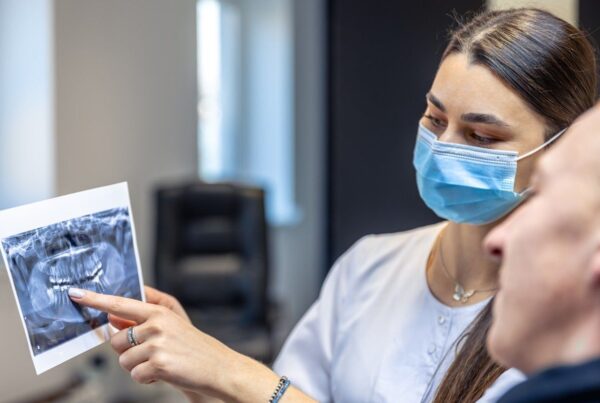
- Seek Regular Monitoring: Regular X-rays are crucial, as secondary caries often presents beneath the restoration (sub-surface) and is invisible to the naked eye until it is advanced.
By combining advanced restorative materials with disciplined home care, you can significantly prolong the life of your fillings and keep your smile healthy for decades.