Mon. & Wed:
7:15 a.m. to 6:15 p.m.
Tues. & Thurs:
7:15 a.m. to 3:15 p.m.
Fri., Sat. & Sun.:
Closed

Handicap accessible office.

Temporomandibular Joint (TMJ) pain refers to discomfort, stiffness, or dysfunction affecting the jaw joint and the muscles that control jaw movement. If you’re struggling with jaw pain, clicking sounds, or difficulty chewing, finding the Best Newark clinic for TMJ relief can make a big difference in getting proper diagnosis and effective treatment. Symptoms of TMJ pain can include jaw tenderness, headaches, ear pain, limited jaw movement, and facial muscle soreness:
Because these symptoms overlap with dental pain, ear problems, muscle issues, and other disorders, patients often wonder where to begin care, with a dentist, a “TMJ specialist,” or another type of healthcare provider.
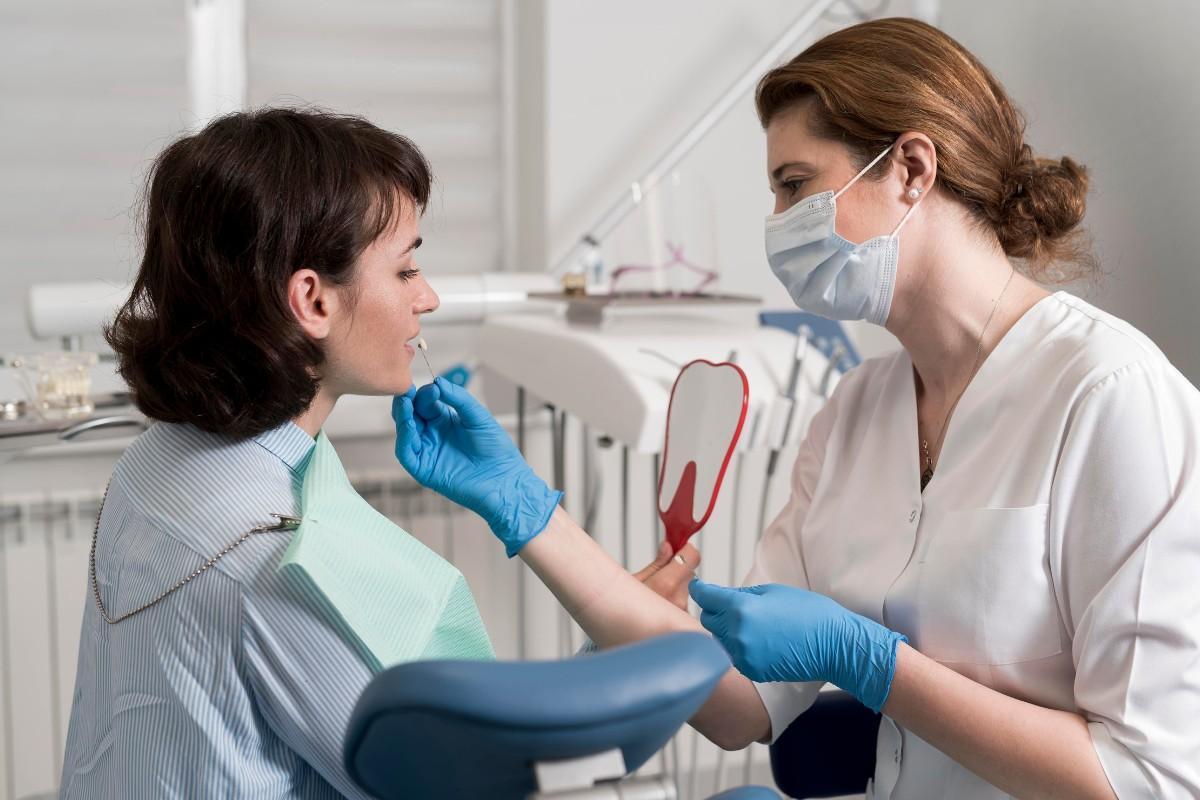
This is a key question for many people dealing with jaw pain.
In the U.S., TMJ disorders are not recognized as a standalone medical specialty in medicine or dentistry. Because of this, no provider holds a unique, universal title of TMJ Specialist like you might see for cardiology or orthopedics.
Instead:
So in practice, TMJ care often involves multiple providers, and the “best” first provider depends on your symptoms, duration, and severity.
For most people with new or moderate TMJ symptoms, a dental evaluation is the best place to start. Here’s why:
General dentists are experts in how your teeth, jaw, and bite fit together. Because TMJ discomfort is often linked to bite misalignment, teeth grinding (bruxism), or clenching, your dentist can identify problems that may be causing or contributing to your jaw pain.
Many dentists provide:
Simple lifestyle changes, like eating softer foods, applying heat/cold, and managing stress, can bring relief early on and often help reduce symptoms before more complex care is needed.
Sometimes TMJ pain is actually caused by tooth decay, gum disease, cracked teeth, or sensitive nerves, issues better identified first by dental professionals. Without ruling these out, treating TMJ alone might miss the actual problem.
Dentists in Newark, DE will know local specialists, oral surgeons, orofacial pain dentists, or local pain clinics, and can refer you appropriately if your symptoms are complex or don’t respond to initial care.
Although many people start with a dentist, there are clear situations where you may want specialized evaluation sooner:
If your jaw pain lasts beyond a few weeks, doesn’t improve with conservative care, or interferes with daily life (eating, talking, sleeping), consider seeing a provider with deeper training in TMJ disorders.
If your jaw locks or you cannot fully open/close your mouth, or you have significant jaw deviation when opening, this can indicate deeper structural problems that may need specialized imaging or intervention.
Symptoms beyond simple jaw pain, like chronic headaches, ear ringing (tinnitus), neck pain, or dizziness, can indicate a more complex disorder needing a multidisciplinary approach.
If simple treatments from your general dentist (mouthguard, bite adjustment, home care) don’t help within 1–3 months, a referral to a specialized provider is appropriate.
There isn’t a single, universally defined “TMJ Specialist,” but several professionals may fill that role depending on the case:
These are dentists with advanced training (residency level) in diagnosis and management of chronic facial pain and TMJ disorders. They are often considered the most focused experts for TMJ issues but are less common.
If conservative treatments fail or if there’s a structural problem in the joint (arthritis, severe degeneration, dislocation), oral surgeons can provide advanced imaging and perform surgery when needed.
Useful if your symptoms include ear pain, ringing, or balance issues where an ENT can rule out true ear pathology before TMJ care.
Physical therapy focused on jaw muscles can be powerful when used with dental care to improve range of motion and reduce pain.
These are involved when TMJ pain arises from systemic joint disorders or nerve‑related issues, respectively.
Here’s a common and effective sequence of care:
Start with an experienced dentist in Newark, DE to evaluate, diagnose, and manage initial TMJ pain, especially in the early stages. If pain persists, becomes severe, or encompasses more complex symptoms, see a provider with advanced training such as an orofacial pain specialist, oral surgeon, or relevant medical specialist. Collaboration between dental and medical providers often yields the best long‑term results.
Phone: 302-368-2558
Main Street Dental
29 Center Street
Newark, DE 19711
Mon. & Wed:
7:15 a.m. to 6:15 p.m.
Tues. & Thurs:
7:15 a.m. to 3:15 p.m.
Fri., Sat. & Sun.:
Closed
Handicap accessible office.
© Main Street Dental Newark